
Everything You Need to Know About Car Starter Replacement in Singapore
You get into your car, press the start button, and hear one heavy click. Then silence. The lights work. The aircon comes on when you turn the ignition. But the engine refuses to crank.
For many drivers in Singapore, the first assumption is a flat battery. But when the battery tests fine and jump starting does nothing, the starter motor is usually the next place to look.
Starter motor problems are less talked about than battery issues, but they are more common than people expect, particularly in older cars or vehicles that have clocked up significant mileage. Knowing the signs early, and understanding what starter replacement actually involves, can save you a lot of time and frustration down the road.
What Does a Car Starter Motor Do?
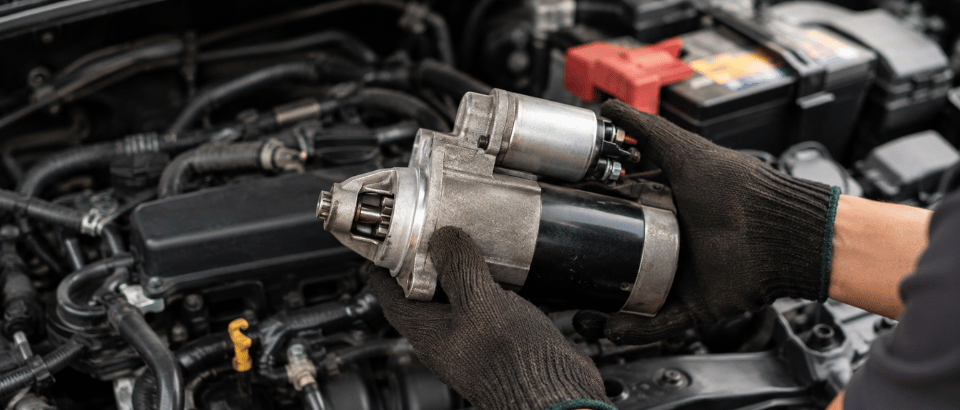
The starter motor is a small but critical electric motor. Its job is to turn the engine over when you start the car, getting the pistons moving so the combustion cycle can begin. Once the engine is running, the starter disengages automatically.
Every time you start your car, the starter motor does a small burst of heavy work. Over time, that wear adds up.
Signs Your Starter Motor Is Failing
-
A Single Loud Click When You Turn the Key
This is the most telling sign. A flat battery usually produces a rapid series of clicks. A faulty starter motor often produces just one solid click and nothing else. The solenoid inside the starter is engaging, but the motor itself is not turning.
-
Grinding Noise During Starting
A grinding sound when you try to start the car, similar to what happens when you turn the key after the engine is already running, often means the starter gear is worn or not meshing properly with the flywheel. This is a sign the starter is on its way out.
-
Engine Does Not Crank At All
If the engine makes no attempt to crank despite the battery being fully charged, the starter motor has likely failed completely.
-
Starter Spins But Engine Does Not Catch
In some cases, you can hear the starter motor running, but the engine does not turn over. This usually means the starter gear is worn and slipping against the flywheel rather than engaging it properly.
-
Intermittent Starting Issues
A starter that is beginning to fail may work sometimes and not others. The car starts fine one day, then refuses to start the next. These intermittent faults can be easy to dismiss, but they tend to get worse over time.
Starter Motor vs Battery: How to Tell the Difference
One of the most common points of confusion for drivers is whether the problem is the starter motor or the battery. The symptoms can look similar from the outside.
Here is a simple way to tell them apart:
A flat battery typically causes rapid clicking when you try to start. The starter is trying to engage but cannot get enough power. If you jump start the car and it fires up straight away, the battery is likely the issue.
A faulty starter motor usually produces one heavy click, or no sound at all. Jump starting will not help because the problem is mechanical, not electrical. The battery may be perfectly healthy, but the starter cannot use that power to crank the engine.
If you are unsure whether your situation is a battery or starter issue, a car battery jump start test can help rule out the battery first before looking deeper at the starter.
What Causes Starter Motor Failure?
-
Age and Wear
Starter motors are built to last, but they do wear out over time. Most cars in Singapore will see starter motor issues after 80,000 to 150,000 kilometres, though this varies by make and how the car is driven.
-
Oil Leaks
On some engine layouts, the starter motor sits close to the bottom of the engine, where it can be exposed to oil leaks. Oil contamination on the starter is a common cause of premature failure, especially in older vehicles.
-
Overheating
Starters are designed for short bursts of use. If a driver keeps cranking the engine repeatedly when it will not start, the starter can overheat and burn out. This is one reason it is always better to stop and diagnose a no-start issue rather than keep trying the ignition.
-
Worn Brushes and Solenoid
Inside the starter motor are carbon brushes and a solenoid that control how the motor engages. These components wear down over time and can cause intermittent or total failure without the external housing showing any obvious damage.
-
Electrical Connection Issues
Corroded or loose wiring connections to the starter can cause it to underperform or stop working entirely. Sometimes the fix is as simple as cleaning or tightening a connection, but if the starter itself has worn internally, replacement is the only proper solution.
Can a Faulty Starter Be Repaired or Does It Need Replacing?
In some cases, minor issues like a corroded connection or a faulty solenoid can be fixed without replacing the whole unit. However, if the starter motor itself is worn internally, a full replacement is usually the more reliable and cost-effective path.
Rebuilt or reconditioned starters are available, but for daily drivers in Singapore, a new replacement starter is generally recommended. Reconditioned parts carry more uncertainty around how long they will last, especially in our heat and humidity.
How Car Starter Replacement Works in Singapore
-
What to Expect During the Job
Starter motor replacement involves removing the faulty unit and fitting a new one in its place. The steps involved depend on where the starter is located on your specific engine, which varies by car make and model.
On some vehicles, the starter is easily accessible and the job is straightforward. On others, it sits in a tight spot and requires more time to reach. A qualified technician will also check the wiring connections and the flywheel teeth at the same time, since a damaged flywheel can wear out a new starter quickly if not addressed.
-
Onsite vs Workshop Replacement
For many drivers in Singapore, the car simply will not start at all when the starter fails, making it impossible to drive to a workshop. Mobile onsite replacement is often the most practical option in this situation.
Swift Battery Specialist provides onsite car starter replacement across Singapore, with a technician coming to your location whether you are at home, at work, or stuck in a carpark.
How Long Does It Take and What Does It Cost?
Starter motor replacement typically takes between 45 minutes and 2 hours, depending on the car model and how accessible the starter is. More complex engine layouts naturally take longer.
The cost in Singapore varies based on the car brand and the type of starter required. Japanese and Korean cars tend to be more affordable to service than European models, where parts are often pricier. Getting a quote before committing is always a good idea.
What Happens If You Ignore a Failing Starter?
A starter motor that is showing early warning signs will eventually fail completely. Because the failure rarely gives much notice, you are likely to find yourself stranded at an inconvenient moment.
Ignoring a grinding noise is particularly risky. A worn starter gear can damage the teeth on the flywheel over time, which is a far more expensive repair than the starter itself.
If something feels off about how your car starts, getting it checked sooner rather than later is always the better call.
How Starter Problems Relate to Other Electrical Issues
Starter motor failure does not happen in isolation. Other components in the starting and charging system can contribute to or mimic starter problems.
The alternator, for instance, is responsible for keeping the battery charged while the car is running. If the alternator is failing, the battery may not have enough charge to engage the starter reliably, even if the starter itself is fine. If your car has been showing signs of electrical weakness alongside starting problems, having the car alternator checked at the same time is worth considering.
Similarly, if there is any uncertainty about whether the battery is healthy, a full battery test from Swift Battery Specialist can confirm whether that is a contributing factor before you commit to any repairs.
How to Prevent Starter Motor Problems
There are no guaranteed ways to prevent a starter motor from eventually wearing out, but a few habits can extend its life:
-
Avoid repeated cranking attempts. If the car does not start after two or three tries, stop. Repeated cranking overheats the starter and accelerates wear.
-
Address oil leaks promptly. If your car has an oil leak near the bottom of the engine, get it seen to before it reaches the starter.
-
Listen for early signs. Grinding, slow cranking, or intermittent starts are worth investigating early. Do not wait for a complete failure.
-
Service the car regularly. Routine servicing catches electrical and mechanical issues before they become serious.
Conclusion
The starter motor is one of those components most drivers never think about until it stops working. When it fails, it leaves you completely stranded, and unlike a flat battery, it cannot be jump started.
If your car is clicking once and going silent, cranking intermittently, or making a grinding noise, get the starter checked. Catching it early is always cheaper and less stressful than a full breakdown.
Frequently Asked Questions
How do I know if it is my starter motor and not my battery?
If rapid clicking happens when you try to start, the battery is the more likely cause. One heavy click with no crank, or no sound at all despite the battery being charged, usually points to the starter motor. Jump starting will fix a flat battery but will not help a failed starter.
Can I drive my car with a failing starter motor?
Once the car is running, a bad starter does not affect driving. The risk is that it may not start again when you next try. If warning signs are showing, get it replaced while you still have the option to drive to a workshop or arrange the repair on your schedule.
How long does a starter motor last?
Most starter motors last between 100,000 and 200,000 kilometres, but this depends heavily on the car, driving habits, and environmental conditions. In Singapore’s heat, wear tends to accelerate slightly compared to cooler climates.
Is it worth replacing a starter motor on an older car?
In most cases, yes. The starter motor is a relatively contained repair. If the rest of the car is in reasonable condition, replacing the starter is a straightforward fix that gives the car a reliable start again.
Why does my car sometimes start and sometimes not?
Intermittent starting problems are a classic sign of a starter motor that is beginning to fail. The internal components are wearing unevenly, so the starter works sometimes but not others. This tends to get progressively worse and will eventually become a complete no-start.
What is the difference between the starter motor and the solenoid?
The solenoid is a component mounted on or near the starter motor. It acts as a switch, sending power to the starter and pushing the starter gear into contact with the flywheel when you turn the key. A faulty solenoid can cause a no-start on its own, and in some cases it can be replaced separately, though often the whole starter assembly is replaced together.
Can a car starter fail suddenly without any warning?
Yes. While many starters show early signs, some fail without any indication at all. This is more likely in older or high-mileage vehicles. If your car is older, having the starter inspected during your next service is worth doing.


