
Why Parking in the Heat Can Kill Your Car Battery
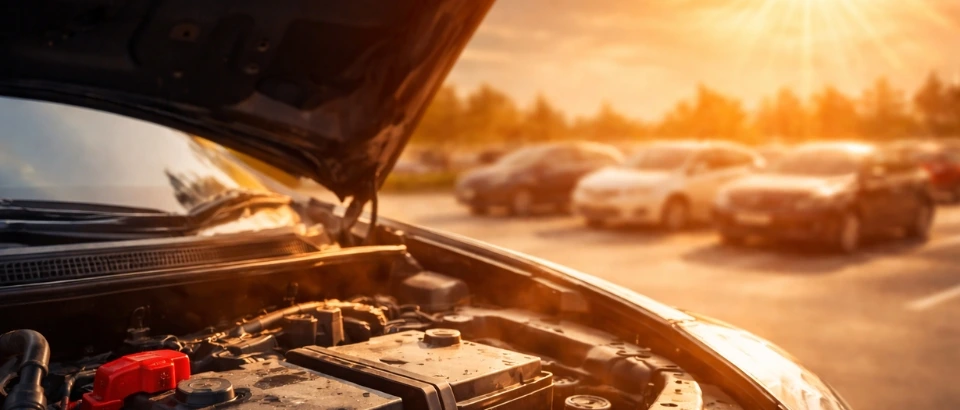
Most drivers will complain winter causes battery problems, yet it is more of the summer heat that causes the trouble. High temperatures silently destroy internal parts way before one can notice any symptoms. Under direct sunshine, a vehicle parked in the direct sun may have its hood temperature much higher than that of the surrounding air. This protracted exposure to heat increases the rate of chemical wear, decreases the strength of the battery framework, and reduces its duration.
Take a look at the reasons why parking in the heat will surely damage your car battery!
1. Heat Accelerates Battery Aging
Car batteries depend on regulated chemical reactions in order to produce electricity. The rate of these reactions is accelerated by heat. Although a quicker response time can have a temporary positive effect on performance, it dramatically increases wear within the company.
Battery deterioration in hot climates occurs at a much faster rate than in temperate climates. A battery meant to last four to five years cannot last two to three years in extreme heat. Constant high temperatures cause active materials in the plates of lead to degrade, and the overall efficiency is compromised. This slow deterioration undermines the capacity of the battery to store and provide power on a constant basis.
2. Rapid Electrolyte Fluid Loss
Most lead-acid batteries contain an electrolyte solution comprising sulfuric acid and water. Too much heat will result in the water in this solution evaporating rapidly. When the fluid level decreases, the internal lead plates come out of the fluid.
Exposing plates to air makes them dry up and incapable of having normal chemical reactions. This eliminates capacity and decreases battery life. In the sealed maintenance-free batteries, the lost fluid is not replaceable, and therefore, it causes permanent internal damage. Long-term parking under the sun is a strong factor that can cause the loss of electrolytes by evaporation.
3. Internal Corrosion Speeds Up
Corrosion is highly accelerated by heat within the battery. When subjected to heat, the metal grids and connectors start getting worn out at a higher rate. Conductivity and electrical resistance are decreased by corrosion.
When corrosion starts, the battery is unable to provide constant power. The drivers could experience a slow cranking of the engine, poor headlights, and unreliable performance of electrical parts. Corrosion affects structural integrity in the long run, causing sudden failure. Frequent terminal cleaning is an external aid, but internal corrosion, which occurs through heat, is more difficult to detect until the performance deteriorates significantly.
4. Engine Bay Heat After Parking
The residual heat of the engine is something that is ignored by many drivers. The engine compartment is highly heated after driving. The battery still absorbs trapped heat even when the car is switched off.
Temperatures in the hood remain high hours after the engine has stopped operating, as there is no flow of air to cool it down. This heat pooling effect is an addition to exposure to sunlight on a daily basis. The cyclic nature of the process of heating and slow cooling causes continuous stress. This pressure hastens the deterioration process of the battery in terms of both chemicals and structural wear over months of summer driving.
Read More: What Really Happens Inside a Car Battery When You Don’t Drive for Weeks?
5. Overcharging Risks in High Temperatures
Internal resistance in batteries is decreased by heat. The charging system can oversupply current into the battery when the resistance is lower than required. This may lead to excessive prices.
Overcharging causes more heat to be generated within the battery, and pressure adds up. It increases plate degradation and accelerates loss of water, as well. Although cars now control the systems of charging, severe temperatures may still interfere with the balance. Over time, the cumulative stress will ultimately shorten the life of the battery significantly.
6. Structural Damage and Casing Stress
Cases of car batteries are made of tough and hard plastic covering, yet extremely high temperatures can undermine even hard materials. High temperatures may expand, warp, or crack the casing when subjected to extreme temperatures over a long period of time.
Damage to the structure can result in leakages or internal misalignment of the components. Physical strain is augmented by heat growth and shrinkage. When casing is weak, the battery will be at risk of vibration damage during a drive. Shielding the battery against direct exposure to the sun will also minimize the structural strain, as well as increase durability.
7. Increased Electrical Demand during summer
Driving during the summer is likely to increase electrical consumption. Infotainment systems, cooling fans, and air conditioning systems exert more load on the battery and the alternator. This additional demand, coupled with heat stress, increases the wear rate.
When the battery is already under the influence of high temperatures, more electrical consumption might push it to break down. Due to short stopovers, drivers can have poor performance or have trouble starting the vehicle. It is important to control the electricity consumption and maintain the charging system when the seasons are hot.
8. Warning Signs of Heat-Damaged Batteries
Damage brought about by heat accumulates. Some of the signs observed early on are the slow starting of engines, dim interior lights, faulty power windows, and battery warnings in the dashboard. There are those batteries that just break down without evident signs.
Early onset of poor performance may be spotted by regular testing of the battery before peak summer and after prolonged exposures to heat. Voltage tests and load tests give an insight into the health of the battery. It is also cheaper to have preventive replacements than to address roadside emergencies, which are caused by the sudden breakdown of the battery.
Conclusion
One of the most harmful things that car batteries are susceptible to is extreme heat. Higher temperatures cause chemical reactions to occur faster. The rate of evaporation of fluids increases, corrosion accelerates, and structural parts become strained due to prolonged exposure to heat. Parking in direct sunlight or leaving a vehicle under extreme temperatures can significantly reduce battery life. To avoid unexpected breakdowns and costly replacements, regular battery checks and timely replacements from trusted professionals like Swift Battery Specialist can make all the difference. So, next time you park your car, keep this in mind to protect your battery and extend its lifespan.


